
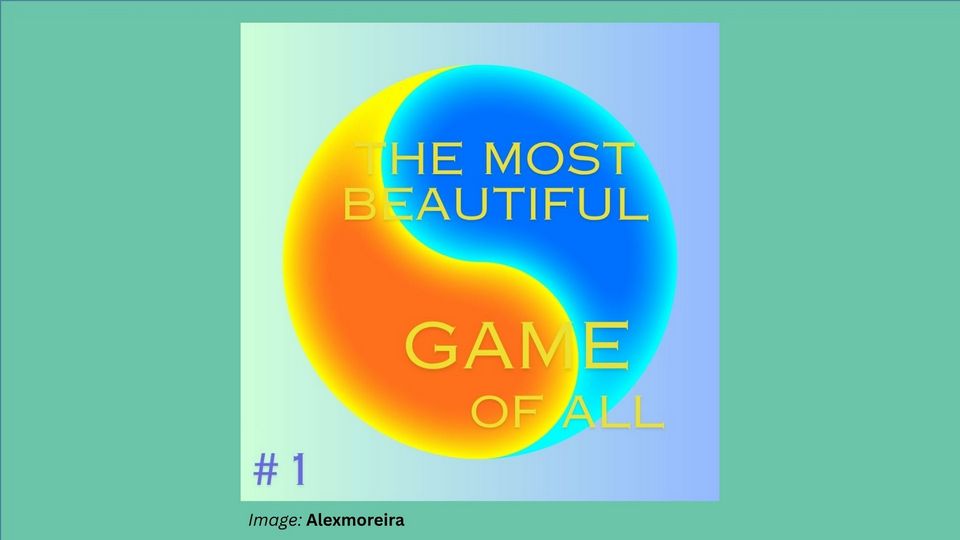
The sporting world attracts attention and enjoyment through big tournaments and finals – football, cricket, golf, tennis – but what can be the most beautiful game of all?.
When we actively take part in a game, notice the word we instinctively use. We don’t work a game. We don’t even do a game.
We play.
Perhaps that tells us more about how to live well than we realise.
We can look on the yin-yang symbol as a cosmic image that explains how to live life as a game rather than a struggle: balance without rigidity, movement without conflict, opposites working in harmonious synergy.
It’s not unlike those moments when we’re “in the zone”. Our attention is free from tension. We feel creative, capable and quietly in command of ourselves.
Play is the opposite of trivial.
In some countries, children don’t start compulsory formal education until 7 years old. Until then, they learn through play, because play isn’t a distraction; it’s one of the deepest ways we learn.
It also raises an interesting question.
We spend years in formal education learning what to think. We’re given knowledge, techniques and ways to organise information.
But how much are we taught how to notice our thoughts, guide them wisely, and prevent them from quietly undermining our mental and emotional wellbeing?
Marcus Aurelius wrote nearly 2000 years ago:
“You have power over your mind — not outside events. Realise this, and you will find strength.”
Everything on the inside can shape what happens on the outside. We choose how to play.